2026 UNESCO press freedom prize.
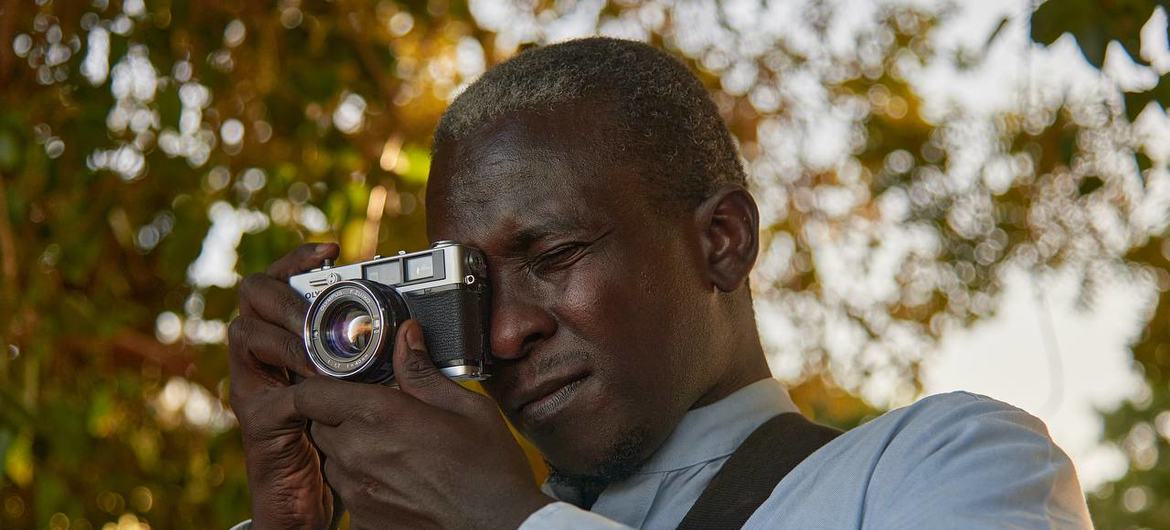
An independent organization for journalists in Sudan has been honoured for its commitment “to deliver accurate, lifesaving information” amid the ongoing civil war, the UN educational and cultural agency UNESCO announced on Thursday. The Sudanese Journalists Syndicate is the latest recipient of the UNESCO/Guillermo Cano World Press Freedom Prize in recognition of the role it has played in condemning the deliberate targeting of media workers in the conflict. The fighting between the Sudanese Armed Forces (SAF) and former allies the Rapid Support Forces (RSF) – which broke out in April 2023 – has created one of the world’s worst humanitarian emergencies and displacement crises.
Courage and dedication
Since then, the Sudanese Journalists Syndicate has documented 32 journalists’ deaths, some 556 violations against media workers and the closure of numerous newspapers and radio stations, “making Sudan one of the most dangerous countries to be a journalist,” UNESCO said.
Khaled El-Enany, the UNESCO Director-General, commended members for their extraordinary courage and unwavering dedication.
“Despite immense challenges, they continue, day after day, to deliver accurate, lifesaving information to their communities when it matters most,” he said.
“Their commitment is a powerful example to us all and a vital service to truth, accountability, and peace.”
Safeguarding values, amplifying voices
The announcement was made ahead of World Press Freedom Day, celebrated annually on 3 May.
For Abdelmoniem Abuedries Ali, chair of the collective, the award “is not only a recognition of the Sudanese Journalists Syndicate, but a tribute to all Sudanese journalists who continue to defend truth and press freedom under extremely difficult and dangerous conditions.”
He added that “it reaffirms the vital role of independent journalism in safeguarding democratic values and amplifying the voices of civilians affected by war.”
Violence in ‘a zone of silence’
The conflict has severely disrupted news gathering and worsened the media landscape in Sudan, UNESCO said.
Journalists have been threatened with violence and arrest, 90 per cent of media infrastructure has been destroyed, and reporting has been hampered by internet and telecommunications blackouts.
“These conditions effectively render the country a ‘zone of silence’ in which large parts of the population exist in an information vacuum,” UNESCO said, while disinformation and propaganda are spreading widely, fuelling hatred and polarization.
The UN agency has stood by Sudanese journalists since the war began. Its activities have included helping to establish the Sudanese Media Forum – comprising more than 20 media outlets – which advocates for press freedom and keeps international focus on Sudan’s humanitarian crisis.
Safe spaces and support
UNESCO has also conducted a survey to identify journalists’ needs, leading to the setting-up of two safe spaces for them in the coastal city of Port Sudan. Some 49 journalists have so far received direct support, including help with relocating to safer areas within the country and abroad. The World Press Freedom Day, celebrated annually on 3 May, is also an opportunity to assess the state of press freedom, which is waning everywhere, not just Sudan.
Press freedom in decline
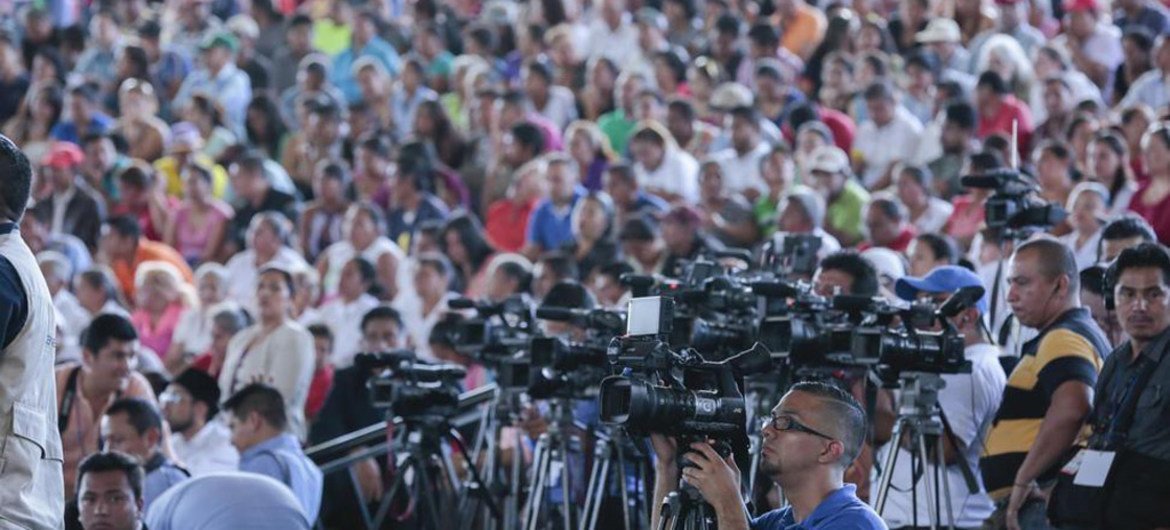
A recent UNESCO report reveals a 10 per cent decline in freedom of expression worldwide since 2012 – a situation that is comparable only to three other periods, the First World War over a century ago, the prelude to the Second World War, and the late 1970s Cold War period.
Globally, self-censorship among the press grew by nearly 70 per cent between 2012 and 2025, affirming that “the most damaging form of censorship is now internalized.”
Furthermore, journalists and others working in the press have faced “diverse forms of legal harassment” that includes defamation lawsuits in the multi-million-dollar range, anti-terrorism regulations and financial legislation.
Research by UN Women and other entities has also revealed a surge in online targeting of journalists, particularly women.
Despite these setbacks, UNESCO highlighted signs of hope, including growing recognition of community media, while its 2025 global survey revealed that nearly half of 194 countries reviewed now have legal frameworks in place.
UNESCO will host the World Press Freedom Conference in Zambia’s capital, Lusaka, next week where the agency will call on governments and civil society to recommit to support independent journalism and the free flow of information.
A recent UNESCO report reveals a 10 per cent decline in freedom of expression worldwide since 2012 – a situation that is comparable only to three other periods, the First World War over a century ago, the prelude to the Second World War, and the late 1970s Cold War period.
Globally, self-censorship among the press grew by nearly 70 per cent between 2012 and 2025, affirming that “the most damaging form of censorship is now internalized.”
Furthermore, journalists and others working in the press have faced “diverse forms of legal harassment” that includes defamation lawsuits in the multi-million-dollar range, anti-terrorism regulations and financial legislation.
Research by UN Women and other entities has also revealed a surge in online targeting of journalists, particularly women.
Despite these setbacks, UNESCO highlighted signs of hope, including growing recognition of community media, while its 2025 global survey revealed that nearly half of 194 countries reviewed now have legal frameworks in place.
UNESCO will host the World Press Freedom Conference in Zambia’s capital, Lusaka, next week where the agency will call on governments and civil society to recommit to support independent journalism and the free flow of information.
About the award : The UNESCO/Guillermo Cano World Press Freedom Prize is presented annually to a person, organisation or institution that has made an outstanding contribution to press freedom, and especially in the face of danger. The award is named in honour of Colombian journalist Guillermo Cano Isaza, who was assassinated in front of the offices of his newspaper, El Espectador, in Bogotá, on 17 December 1986.
The prize was established in 1997 and winners are selected by an international independent jury of media professionals.
Previous laureates include Palestinian journalists covering Gaza and Maria Ressa of the Philippines, joint recipient of the 2021 Nobel Peace Prize alongside fellow journalist Dmitry Muratov of Russia.


Comments
Post a Comment